Week 107 · Phnom Penh, Cambodia · S21 & The Killing Fields
Phnom
Never had planned on visiting Phnom Penh before — only came this trip because it was "on the way." Glad that I did as I learned much more about a terrible part of world history that happened during my lifetime and I was not aware of how bad it was.
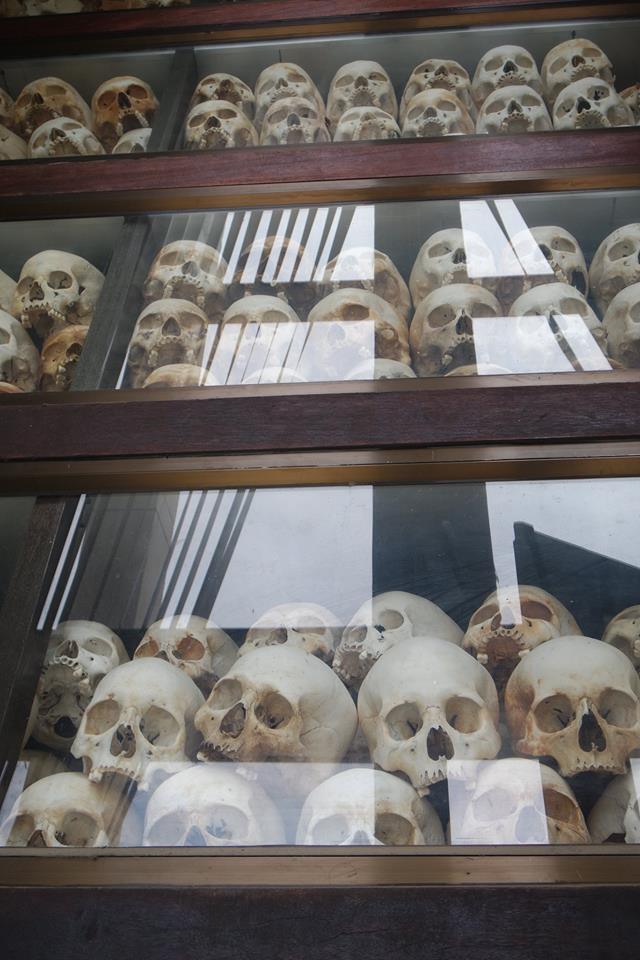
The Khmer Rouge was an ultra-communist movement that filled the vacuum after a civil war in Cambodia — the ultimate objective was a utopia where everyone was equal: equally poor and uneducated, living on farms away from cities to maximize rice production for export to China. Anyone who disagreed was killed — then the rest of their family was killed to avoid "revenge" later. Over 40% of the population of Cambodia was killed or died from starvation between 1975–1978, with educated people killed at a disproportionately higher rate. The rest of the world was generally unaware in the aftermath of the Vietnam War ending and Cambodia stopping its civil war.
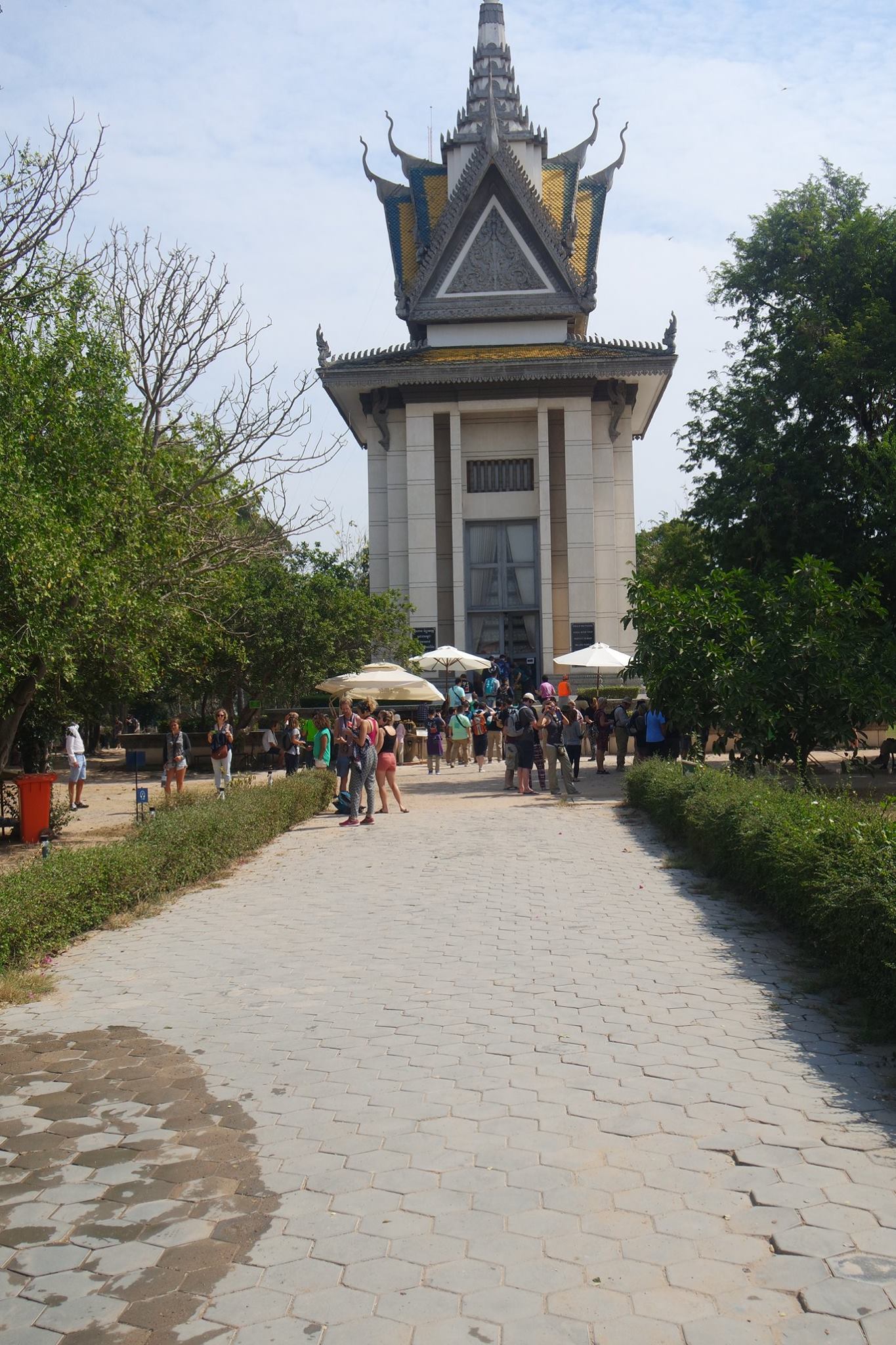
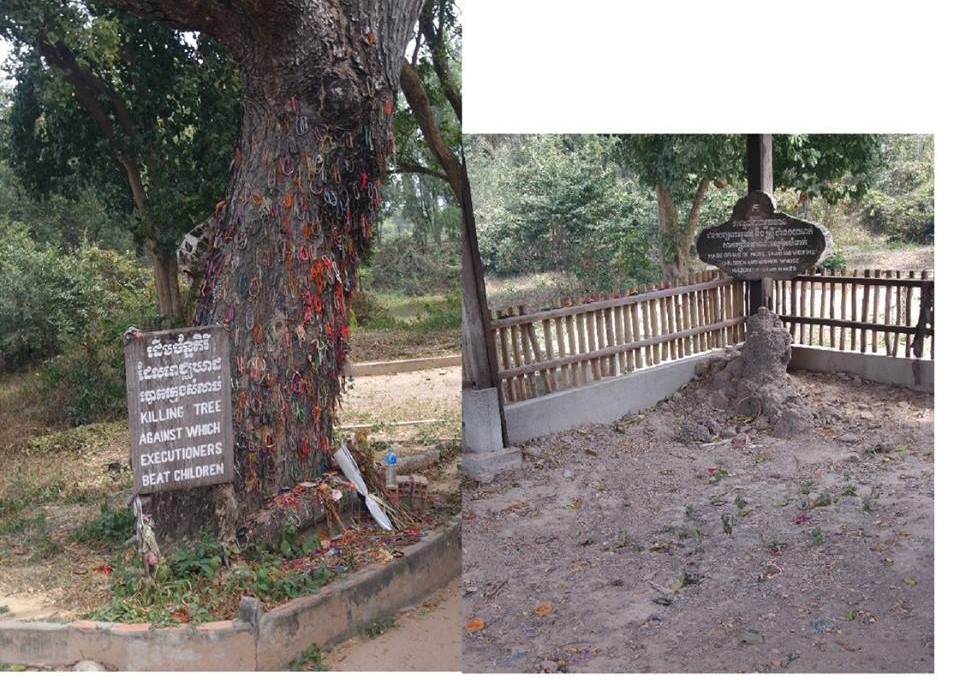
The leader was a highly educated man from a leading family who changed his name to Pol Pot. Using similar tactics as ISIS, he convinced young men that they had no future — and most didn't — unless they followed him and killed off the "elites" and anyone else against their idea of utopia. He was able to get most of Phnom Penh abandoned in just a few days by dropping leaflets claiming the USA was going to drop a nuclear bomb on the city — once on the farms, the people were easy to control. I visited a prison in town where people were tortured (S21) and also visited the "Killing Fields" where people were ultimately sent to be murdered. No bullets — too expensive. Clubs and knives only. Hard to believe the evil people will do when it is justified by others.
The Khmer Rouge ruled Cambodia from 1975 to 1979 under Pol Pot (born Saloth Sar, 1925–1998), who was educated in France. An estimated 1.5 to 2 million people — roughly a quarter of Cambodia's population — died from execution, starvation, disease, and forced labour. The regime was ended not by Western intervention but by a Vietnamese invasion in January 1979. The S-21 prison (Tuol Sleng) held an estimated 17,000 people during the regime; only 7–12 survived. The Extraordinary Chambers in the Courts of Cambodia — a UN-backed tribunal — secured its first genocide conviction in 2018, nearly 40 years after the regime ended.
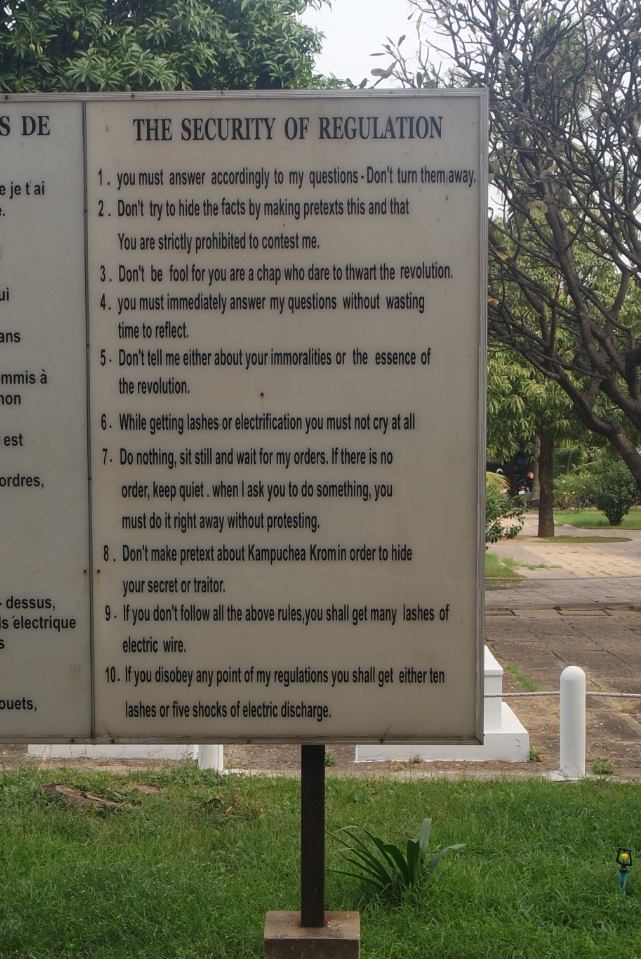


"Hard to believe the evil people will do when it is justified by others."
Accommodation and logistics were a total disaster — but given what I saw, it was a minor inconvenience in life. When I was dropped off at a square (far from my guest room in someone's personal residence) by mini-bus from Siem Reap, I was greeted by numerous tuk-tuk drivers trying to help — including one confusing my arm sling for a bag strap and grabbing it and pulling me away from the mini-bus. Then the mini-bus left with my suitcase. I ran as fast as I have this century but could not catch it, broken wrist and all. I got really lucky when two 12-year-olds on a scooter noticed I was chasing and caught up and banged on the mini-bus window while it was accelerating away. He stopped and gave me a disgusted look until he opened the back and my suitcase was there — he then said I shouldn't have been messing around.
Cambodia remains one of the most heavily mined countries in the world, a legacy of the Vietnam War era and the Khmer Rouge period. An estimated 4–6 million landmines and unexploded ordnance were scattered across the country between the 1960s and 1990s. The HALO Trust and Cambodian Mine Action Centre have cleared millions of devices, but the work continues. Secretary of State John Kerry's visit shown in these photos was tied to US support for demining efforts — the US contributed significantly to mine contamination during bombing campaigns in the 1970s and has since provided substantial funding for clearance.